Future of Gaming: Web3, NFTs and Digital Ownership
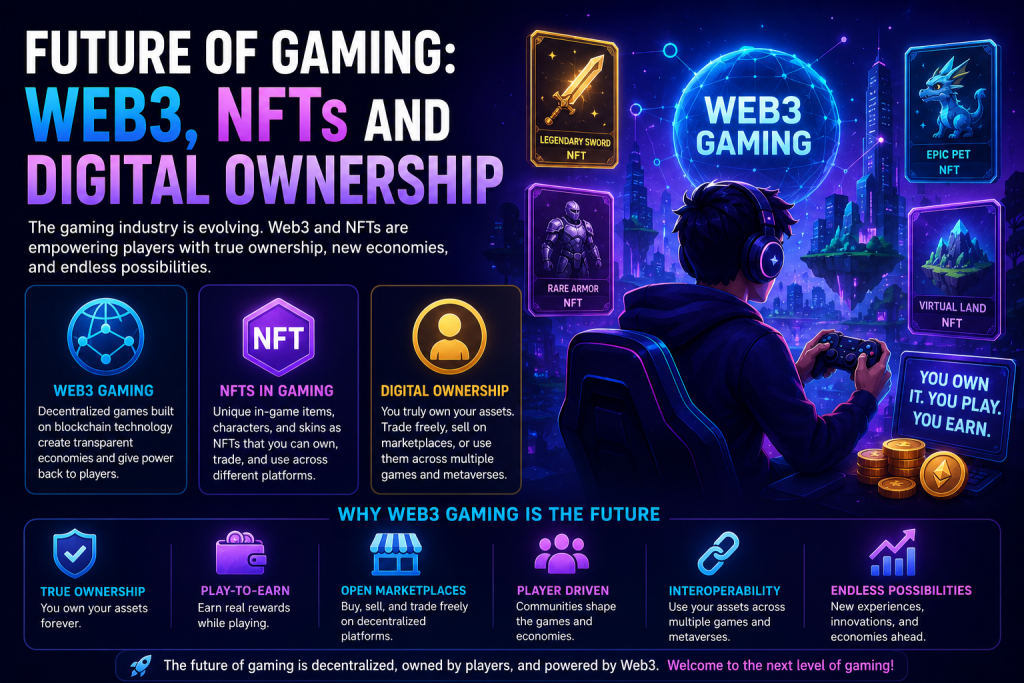
The gaming industry is entering a new era powered by blockchain technology, NFTs, and Web3 innovation. For decades, players have spent billions of dollars on in-game items, skins, characters, and virtual currencies without truly owning them. Web3 gaming is changing that by introducing digital ownership, decentralized economies, and player-driven ecosystems.
As technology continues to evolve, Web3 gaming is expected to reshape how players interact with games and digital assets in the years ahead.
What Is Web3 Gaming?
Web3 gaming refers to blockchain-based games that use decentralized technologies such as cryptocurrencies, smart contracts, and NFTs. Unlike traditional games, Web3 games allow players to own their in-game assets and participate in virtual economies.
Players can buy, sell, trade, and transfer assets without relying entirely on game publishers or centralized platforms.
Understanding NFTs in Gaming
NFTs (Non-Fungible Tokens) are unique digital assets stored on a blockchain. In gaming, NFTs can represent:
- Characters
- Weapons
- Skins
- Virtual land
- Collectibles
- Game items
Because NFTs are unique and verifiable, players can prove ownership of their digital assets and trade them on supported marketplaces.
What Is Digital Ownership?
Digital ownership means players truly own the virtual assets they earn or purchase.
In traditional games:
- Assets remain under the control of developers.
- Items cannot usually be transferred outside the game.
- Purchases may become worthless if a game shuts down.
In Web3 games:
- Assets belong to players.
- Items can often be sold or traded freely.
- Ownership records are secured on the blockchain.
This gives gamers more control over their investments and achievements.
Why Web3 Gaming Is the Future
1. True Ownership of Assets
Players no longer rent digital items from game companies. Instead, they own assets that can potentially maintain value beyond a single game.
2. Play-to-Earn Opportunities
Many blockchain games reward players with cryptocurrency and NFTs for completing missions, participating in events, and achieving milestones.
This creates new opportunities for gamers to earn rewards while playing.
3. Decentralized Economies
Web3 gaming introduces player-driven economies where communities influence asset values and marketplace activity.
This makes gaming ecosystems more interactive and engaging.
4. Cross-Game Compatibility
Future blockchain projects aim to make digital assets usable across multiple games and virtual worlds.
Imagine using the same character, weapon, or collectible in different gaming experiences.
5. Enhanced Transparency
Blockchain technology records ownership and transactions publicly, reducing fraud and improving trust between players.
Benefits of NFTs and Digital Ownership
For Players
- Full ownership of assets
- Freedom to trade items
- Potential earning opportunities
- Increased transparency
- Greater control over digital investments
For Developers
- New revenue models
- Stronger player engagement
- Community-driven ecosystems
- Reduced marketplace fraud
- Improved asset tracking
Challenges Facing Web3 Gaming
Despite its promise, Web3 gaming still faces several obstacles.
Market Volatility
Cryptocurrency and NFT values can rise or fall rapidly, affecting player earnings.
User Experience
Many blockchain games still require technical knowledge that can be difficult for beginners.
Scalability Issues
Some blockchain networks experience congestion during periods of high activity.
Regulatory Concerns
Governments worldwide are still developing regulations for cryptocurrencies and blockchain-based assets.
The Role of the Metaverse
The metaverse and Web3 gaming are closely connected.
Future virtual worlds may allow players to:
- Own virtual property
- Attend digital events
- Trade NFTs
- Build businesses
- Interact across multiple platforms
Digital ownership will likely become a core part of these experiences.
What the Future May Look Like
Over the next decade, Web3 gaming could introduce:
- Seamless NFT integration
- Cross-platform asset ownership
- Decentralized game governance
- Improved blockchain scalability
- Lower transaction fees
- More immersive metaverse experiences
As technology matures, blockchain gaming may become a mainstream part of the global gaming industry.
Conclusion
Web3, NFTs, and digital ownership are transforming the future of gaming. By giving players true control over their assets and introducing decentralized economies, blockchain technology is creating a more open and rewarding gaming environment.
While challenges remain, the long-term potential of Web3 gaming is enormous. As adoption continues to grow, players can expect more ownership, more freedom, and more opportunities than ever before in the digital gaming world.
Leave a Reply