Web3 Gaming Ecosystem Explained for Beginners (2026 Guide)
Introduction
The gaming industry is evolving rapidly, and one of the biggest innovations is Web3 gaming. Unlike traditional games where players spend money on in-game items they don’t truly own, Web3 games allow players to own, trade, and even earn from their digital assets using blockchain technology.
If you’re new to crypto and blockchain gaming, this beginner-friendly guide will explain the Web3 gaming ecosystem, how it works, its benefits, challenges, and why it’s becoming a major trend in 2026.
What Is Web3 Gaming?
Web3 gaming refers to video games built on blockchain technology. These games give players ownership of in-game assets such as characters, skins, weapons, land, and collectibles.
In traditional games:
- Developers control all game assets.
- Players cannot freely sell or transfer items.
- Progress is locked within a single game.
In Web3 games:
- Assets are stored on a blockchain.
- Players own their digital items.
- Items can often be traded or sold on marketplaces.
- Players may earn cryptocurrency rewards.
This creates a player-driven economy where gamers have more control over their virtual possessions.
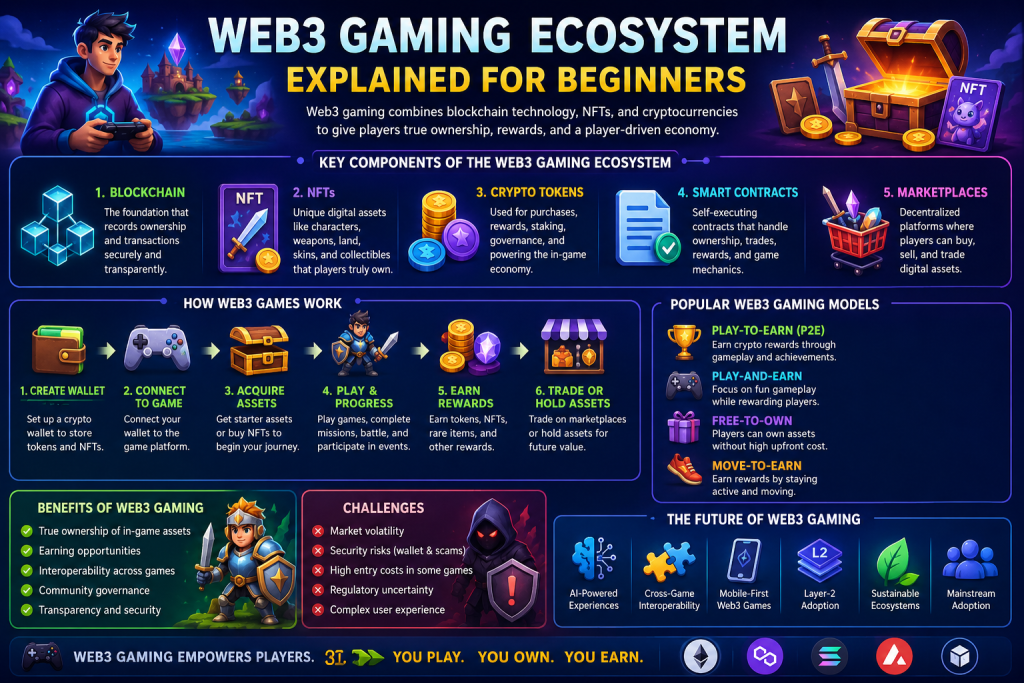
Key Components of the Web3 Gaming Ecosystem
1. Blockchain Technology
Blockchain serves as the foundation of Web3 gaming. It records ownership and transactions securely and transparently.
Popular gaming blockchains include:
- Ethereum
- Polygon
- BNB Chain
- Solana
- Immutable
- Avalanche
These networks help verify ownership and enable secure trading of digital assets.
2. NFTs (Non-Fungible Tokens)
NFTs are unique digital assets stored on a blockchain.
In gaming, NFTs can represent:
- Characters
- Weapons
- Skins
- Virtual land
- Collectibles
- Pets
Since NFTs are unique, players can truly own and trade them outside the game.
3. Cryptocurrency Tokens
Most Web3 games use their own cryptocurrency tokens.
These tokens can be used for:
- Purchasing items
- Paying transaction fees
- Governance voting
- Rewarding players
- Staking
Some players earn tokens through gameplay and exchange them for other cryptocurrencies.
4. Smart Contracts
Smart contracts are automated programs that execute transactions without intermediaries.
They handle:
- NFT ownership
- Marketplace trades
- Reward distribution
- In-game economies
This makes transactions transparent and secure.
5. Decentralized Marketplaces
Players can buy, sell, and trade assets on NFT marketplaces.
Benefits include:
- Global access
- Player ownership
- Transparent pricing
- Open trading opportunities
These marketplaces help create active gaming economies.
How Web3 Games Work
A typical Web3 gaming experience follows these steps:
Step 1: Create a Crypto Wallet
Players need a crypto wallet to store tokens and NFTs.
Popular wallets include:
- MetaMask
- Phantom
- Trust Wallet
Step 2: Connect to the Game
The wallet connects to a blockchain-based game platform.
Step 3: Acquire Assets
Players may receive free starter assets or purchase NFTs.
Step 4: Play and Progress
Players complete quests, battle opponents, build worlds, or participate in events.
Step 5: Earn Rewards
Rewards may include:
- Cryptocurrency tokens
- NFTs
- Rare collectibles
- Governance rights
Step 6: Trade or Hold Assets
Players can keep, sell, or transfer assets as they choose.
Popular Web3 Gaming Models
Play-to-Earn (P2E)
Players earn cryptocurrency rewards through gameplay.
Examples include:
- Battle victories
- Completing missions
- Ranking competitions
Play-and-Earn
Focuses on enjoyable gameplay first while still offering rewards.
This model has become more sustainable than early Play-to-Earn systems.
Free-to-Own
Players receive ownership of assets without requiring a large upfront investment.
Move-to-Earn
Players earn rewards through physical activity such as walking or running.
Benefits of Web3 Gaming
True Ownership
Players control their digital assets rather than developers.
Earning Opportunities
Gamers can potentially earn rewards from gameplay.
Interoperability
Some assets may work across multiple games and platforms.
Community Governance
Players can vote on game updates and ecosystem decisions.
Transparency
Blockchain records provide public verification of ownership and transactions.
Challenges Facing Web3 Gaming
Market Volatility
Token prices can rise or fall significantly.
Security Risks
Users must protect wallets and private keys.
High Entry Costs
Some games require purchasing NFTs to participate.
Regulatory Uncertainty
Crypto regulations vary between countries.
Complex User Experience
Wallets and blockchain transactions can be confusing for beginners.
Best Web3 Gaming Genres in 2026
Popular categories include:
RPG Games
Role-playing adventures with NFT characters and equipment.
Strategy Games
Build kingdoms, manage resources, and compete for rewards.
Trading Card Games
Collect and trade blockchain-based cards.
Metaverse Games
Explore virtual worlds and own digital land.
Sports Games
Compete using NFT athletes and collectibles.
Battle Arena Games
Fight opponents and earn token rewards.
The Future of Web3 Gaming
The future looks promising as developers focus on better gameplay, lower transaction fees, and improved user experiences.
Major trends expected in 2026 include:
- AI-powered gaming economies
- Cross-game asset interoperability
- Mobile-first Web3 games
- Layer-2 blockchain adoption
- More sustainable reward systems
- Mainstream gaming studio participation
As technology improves, Web3 gaming could become a standard part of the global gaming industry.
Conclusion
Web3 gaming combines blockchain technology, NFTs, cryptocurrencies, and decentralized ownership to create a new generation of player-focused games. Unlike traditional gaming, players can truly own their assets, participate in digital economies, and potentially earn rewards through gameplay.
Leave a Reply